


















Spray Dryer | Multi Effect Evaporator Manufacturer and Supplier – Shachi Engineering

Cage Mill Flash Dryer

Flash Dryer | Flash Dryer Manufacturer | Rapid Drying of Filter Cakes, Pastes & Lumpy Solids

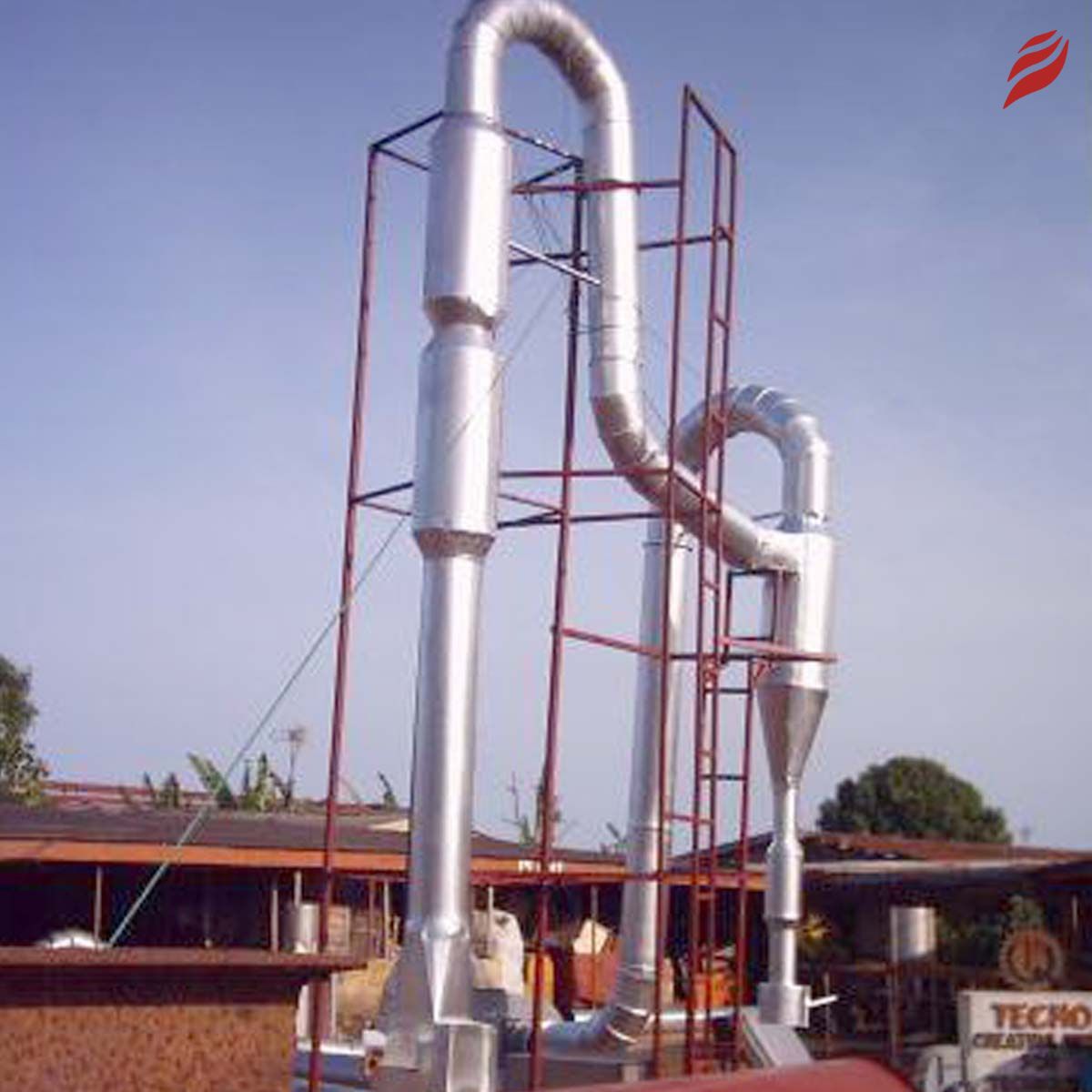
Turn hard-to-handle wet solids into uniform, free-flowing powder in seconds. As a Flash Dryer manufacturer, Shachi’s Flash Dryer (Cage Mill Flash Dryer, CMFD) combines high-velocity hot air with a rotor-stator cage mill to disperse and deagglomerate feed on the fly, exposing fresh surface for ultra-fast moisture removal and continuous discharge.
Cage Mill Flash Dryer

Cage Mill Flash Dryer: Built Around Your Material

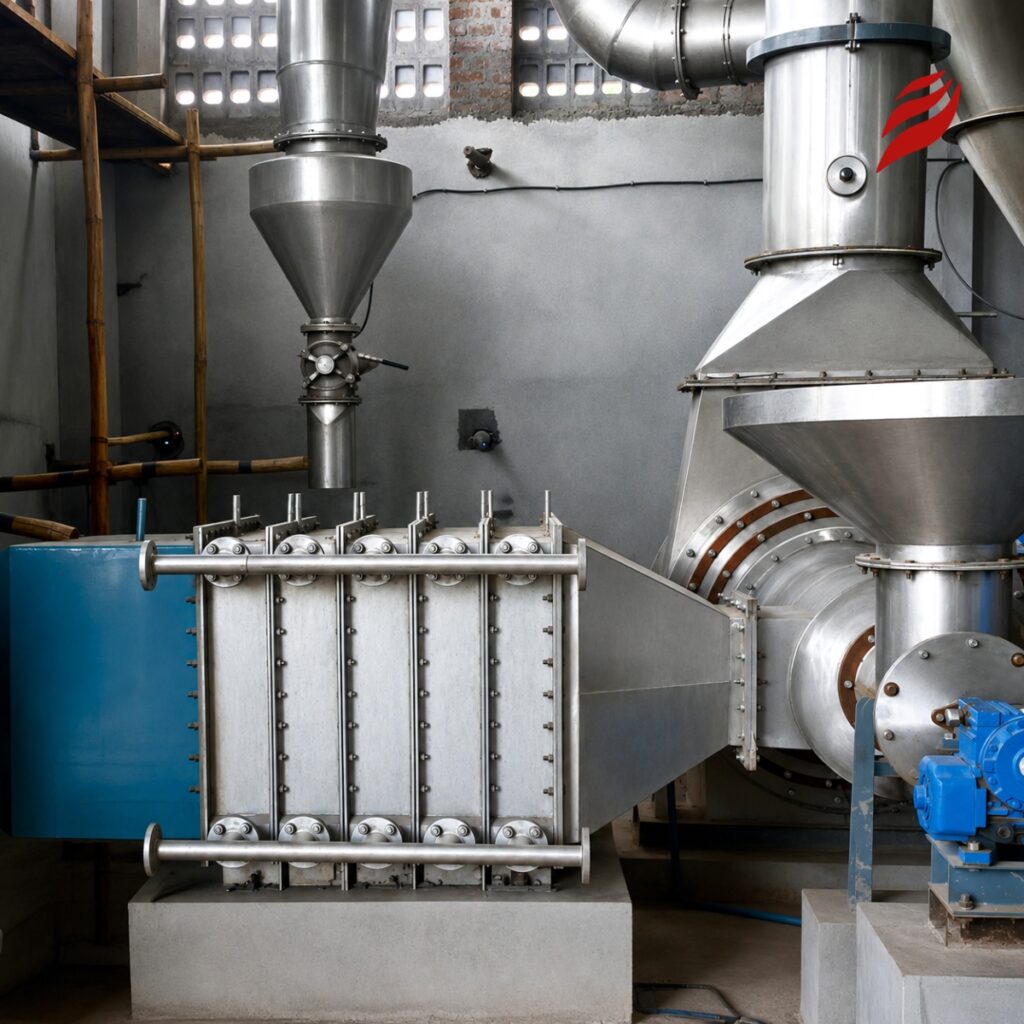
Built around your material, CMFD systems follow the cage mill working principle stable screw feeding for wet cakes, cage geometry tuned for controlled dispersion, tangential hot-air entry to create an intense drying vortex, and efficient powder recovery engineered for high throughput, consistent powder quality, and low OPEX.

Advantages of Cage Mill Flash Dryer

Drying in seconds

with extremely short residence time, protecting heat-sensitive products

Handles tough feeds

(filter cakes, sticky pastes, agglomerates) without lengthy pre-conditioning

Consistent, free-flowing output

via in-chamber dispersion and rapid moisture removal

Compact footprint & continuous operation

for easy plant integration

Energy-efficient options

including hot-air recycle and tuned air/solids loading

Key Features

Cage Mill Flash Dryer

Need technical clarity or a customised solution in evaporation and drying needs?

Flash Dryer Applications

Chemicals (pigments, resins, polymers, catalysts)
Minerals (kaolin, bentonite, silica)
Food ingredients and nutraceuticals
Environmental streams (industrial/municipal sludges) where volume reduction
Quick, gentle drying are critical

Recent Project

Need help selecting the right CMFD configuration?

FAQs - Cage Mill Flash Dryer

Wet solids are metered (typically by screw feeder) into a rotor, stator cage mill that disperses and deagglomerates the feed. Tangential hot air entrains the particles, drying them in a short vertical or looped path. Dried solids are recovered in cyclones/bag filters; cleaned air is exhausted or recycled.

Filter cakes, pastes, and lumpy powders that benefit from instant dispersion, e.g., minerals (kaolin, bentonite), chemicals (pigments, resins), detergents, and select food/nutraceutical ingredients. Environmental sludges can also be dried for volume reduction or energy recovery.

Primarily deagglomeration/dispersion to expose internal moisture; some size reduction of soft agglomerates occurs as needed. Configurations can be tuned to emphasize dispersion without aggressive milling.

Residence time is usually sub-seconds to a few seconds. Gas temperatures can be higher than in other dryers because contact time is short, boosting throughput while minimizing thermal damage. Exact set-points depend on product limits.

By tuning inlet gas temperature/flow, solids loading, rotor speed (dispersion intensity), and recovery back-pressure. Consistent feeding and correct cyclone/bag-filter sizing are key to stable outlet moisture.

CMFDs can be highly energy-efficient due to rapid drying. Where safe and beneficial, hot-air recycle reduces fuel use, design depends on product volatility and hygiene/safety requirements.

Feed description (cake/paste, particle size, bulk density), inlet/outlet moisture, permissible temperatures, abrasiveness/corrosion concerns, target PSD and bulk properties, throughput, utilities (air/steam/gas/power), and space/height constraints.

Blog

Spray drying is an energy-intensive process. Every plant depends heavily on

Importance of Downtime Control in Spray Drying Plant Performance

Downtime is one of the biggest hidden costs in spray

Nutraceuticals are made for human consumption. They include health supplements,