












Spray Dryer | Multi Effect Evaporator Manufacturer and Supplier – Shachi Engineering

Multi-Effect Evaporator (MEE)

Multi effect evaporator plant | Multi-Effect Evaporator (MEE) | Energy-Efficient Concentration for Process & ETP

Concentrate liquids and effluents with minimum steam with Shachi’s Multi effect evaporator plant. A multi effect evaporator (MEE) works where vapour from one vessel heats the next stage at lower pressure, so you reuse heat, reduce energy consumption, and achieve the required concentration more efficiently.
Multi-Effect Evaporator (MEE)

Leading Multi effect evaporator manufacturer in India designed for Stable Operations and Low OPEX

Forward-feed or backward-feed MEE systems engineered around your feed, fouling tendency, and end use. As one of the trusted multi effect evaporator manufacturers in India, Shachi also pairs the right supporting technologies (as needed) for difficult streams and ZLD lines so concentration stays stable and operating costs stay predictable.

Advantages of Multi-Effect Evaporators

Lower OPEX via steam economy

latent heat is reused across effects

High concentration ratios

to cut storage/transport and prep feeds for drying/crystallization

Flexible by design

handles a wide range of viscosities and solids with precise process control

More sustainable operations

by enabling heat recovery and water reuse

Key Features

Multi-Effect Evaporator (MEE)

Not happy with your current evaporation setup?

Multi-Effect Evaporators Applications

Desalination
Food & beverage (juices, dairy, sauces)
Chemicals (solvent separation, product recovery)
Wastewater/ETP concentration with water recycle

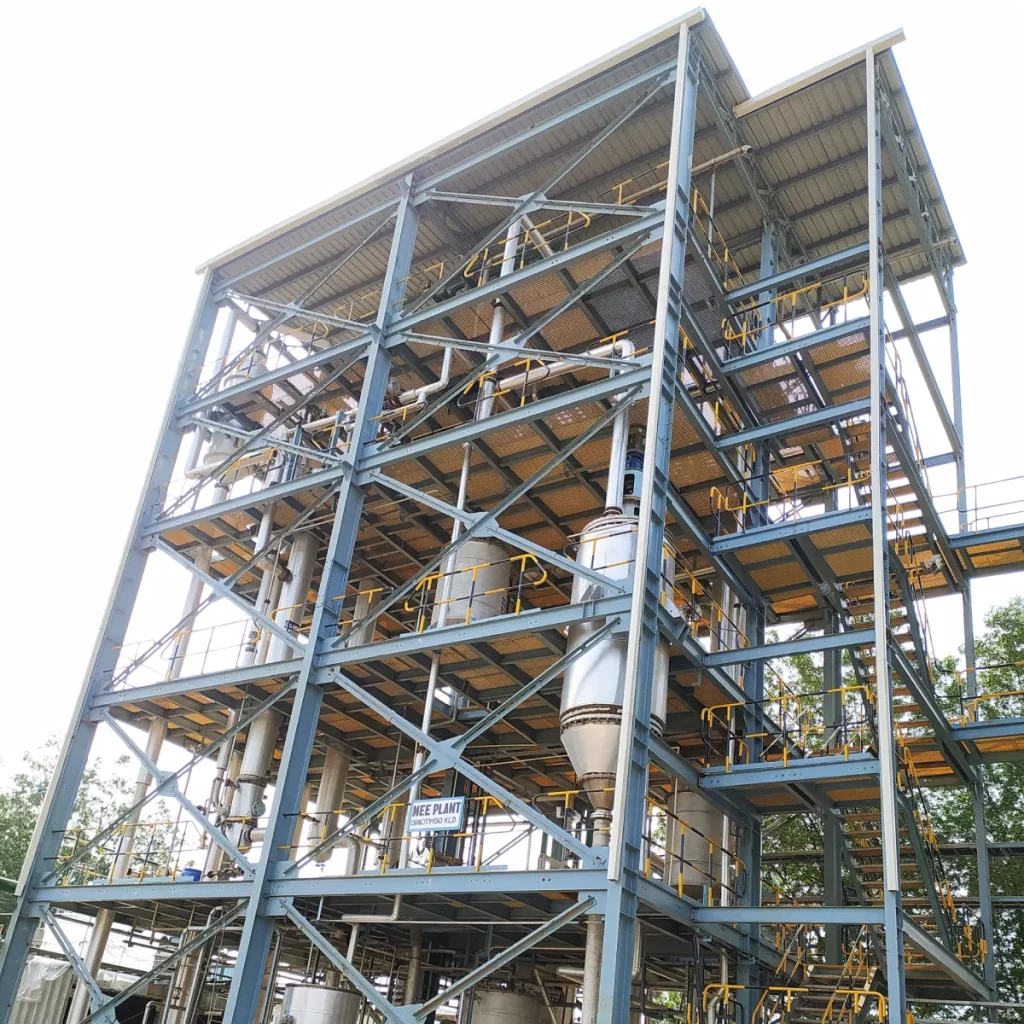
Recent Project

Recent Project

Need help selecting the right MEE configuration?

FAQs - Multi-Effect Evaporators

By cascading effects at lower pressures, the vapor from one effect becomes the heating medium for the next, reusing latent heat and reducing fresh steam demand.

Forward-feed sends fresh feed to the first effect; it’s simple and suits lower-viscosity feeds. Backward-feed introduces feed at the last (hottest) effect, helping viscous or high-solids streams and improving overall temperature driving force.

MEEs are designed for high concentration ratios; the exact number depends on feed composition, fouling tendency, and temperature limits. (We’ll size effects and heat surfaces from your feed data.)

Desalination, food & beverage, chemical processing, and wastewater treatment, where energy-efficient concentration, product quality, and water recycle matter.

We pair the MEE with suitable bodies, self-cleaning or forced-circulation designs, and optimize velocities and temperature profiles to mitigate deposition.

Yes, common pairings include crystallization, drying, and distillation, enabling complete process trains or ZLD blocks.

Feed chemistry and rheology, inlet/target solids, allowable temperatures, fouling behavior, required product quality, utilities (steam/power/cooling), and footprint/height. We’ll then recommend the number of effects, flow scheme, and body type.

Blog

Spray drying is an energy-intensive process. Every plant depends heavily on
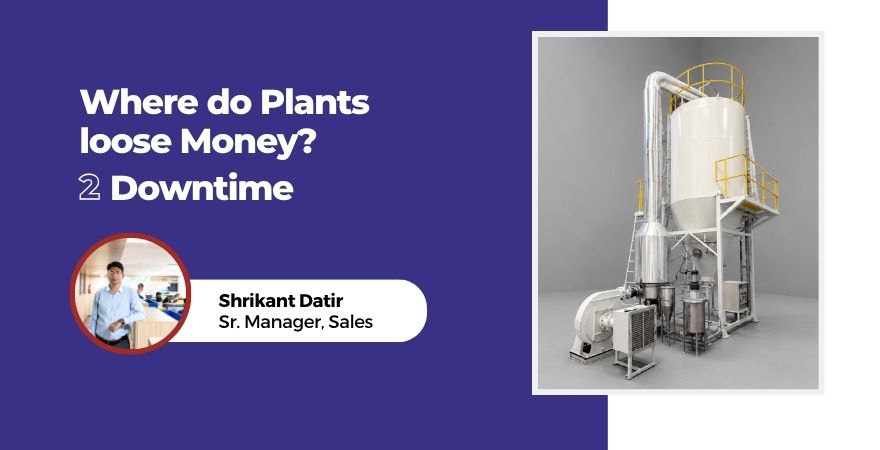
Importance of Downtime Control in Spray Drying Plant Performance

Downtime is one of the biggest hidden costs in spray
Nutraceuticals are made for human consumption. They include health supplements,